Electrical cable training
Enhance workforce capabilities and ensure operational integrity with courses in medium voltage cable splicing, terminating, testing, and fault location. Equip your team with the critical skills to improve system reliability and maintain safety standards.
Mastery of cable systems is essential for maintaining the backbone of our electrical infrastructure. Our selection of hands-on training courses is designed to equip electricians and technicians with the specialized skills needed for cable splicing, terminating, testing, diagnostics, and fault location. Enrolling your personnel ensures they can expertly install, maintain, and repair 5-35 kV solid dielectric power cables, leading to enhanced system reliability and reduced downtime. Participants will gain critical competencies that improve safety, prevent costly failures, and support efficient operations. This focused training directly translates to a more capable workforce and a more resilient power system.
To get a quote or to discuss your electrical training needs, contact us below, or call us at 1-877-594-3156

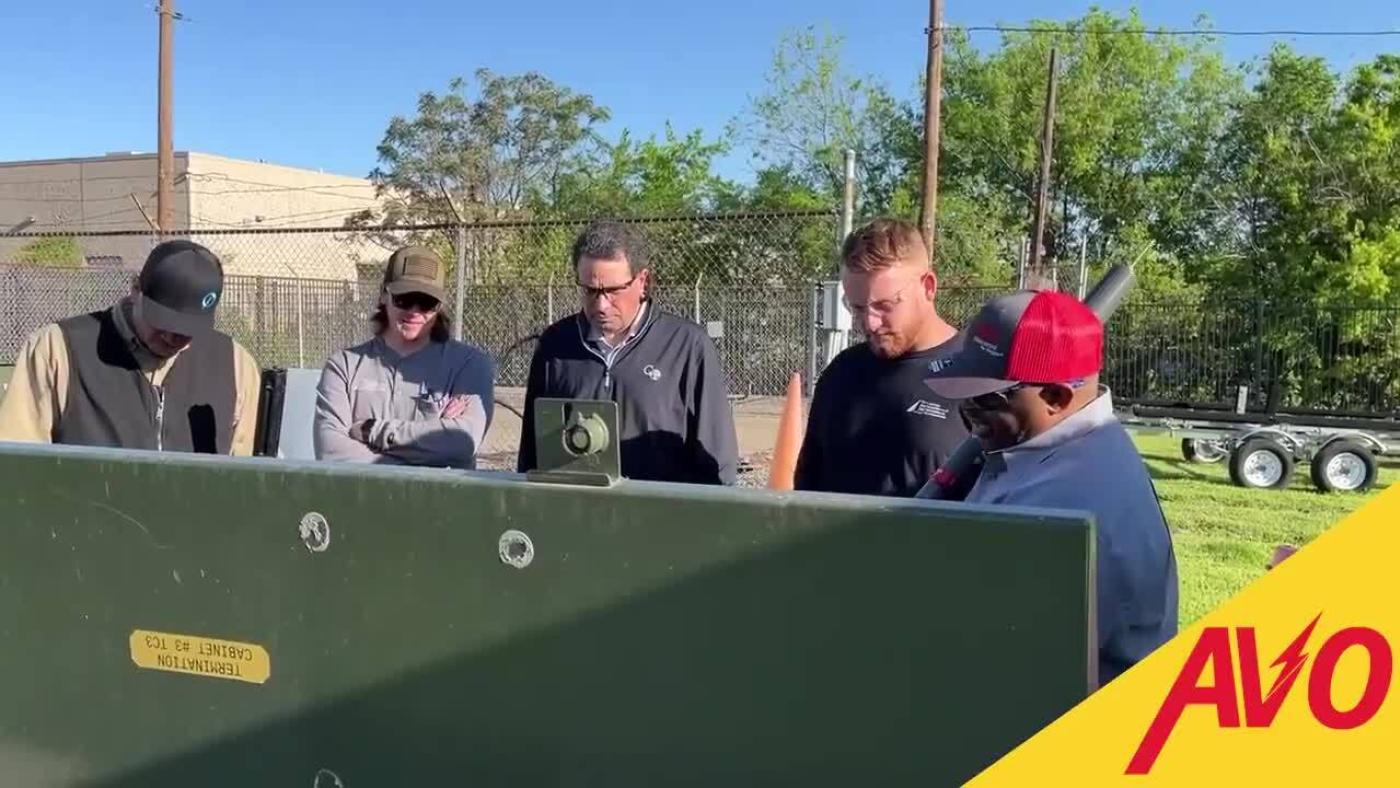
Cable Fault Location & Tracing, Medium-Voltage
View listings
Cable Splicing & Terminating, Medium-Voltage
View listings
Cable Testing & Diagnostics, Medium-Voltage
View listings
Certified Fiber Optics Technician
View listings
Cable Certifications
View certifications
Cable Fault Location & Tracing, Medium-Voltage (CFLT)
Course description and overview
CABLE FAULT LOCATION & TRACING, MEDIUM-VOLTAGE (CFLT | #132)
4.5 DAYS | 3.2 CEUs
This hands-on course is intended for new or experienced electricians and technicians that install, maintain, repair or troubleshoot 5-35 kV solid dielectric power cables. Medium voltage cable systems are the backbone of electrical systems worldwide, yet they are often the most ignored part of the power system – until there is a failure. One of the most important aspects of medium voltage cable maintenance is “fault location.”
Cable systems today have higher failure rates than ever before, due to aging, environmental stresses and improper installation. The ability to efficiently locate faults, greatly reduces downtime and outage costs.
*FOR ONSITE SESSIONS ONLY: NOTE THAT THE CUSTOMER MUST SUPPLY THE ITEMS MARKED WITH AN ASTERISK ON THE EQUIPMENT LIST. AVO WILL NOT BE SHIPPING THEM.
Learning Objectives
Upon completion of this course and lab, the participants will demonstrate by attaining a minimum average grade of 80% (between lab practice and final exam), that he/she is able to:
- Identify medium voltage cable components and causesof failure.
- Utilize safe work practices for cable testing per OSHA and industry consensus standards.
- Trace cable installations with modern cable route tracing and identification equipment.
- Locate secondary faults using earth gradient (sheath fault) technologies.
- Pinpoint faults using magnetic and acoustical tracing system and arc reflection technologies.
- Apply a proven fault locating process; Test, Analyze, Localize.
- Locate faults in a comprehensive cable field lab environment.
Upcoming sessions (Open enrollment, 2026)
| Dallas | 06/08/2026, 08:00 am - 06/12/2026, 12:00 pm |
| Dallas | 07/20/2026, 08:00 am - 07/24/2026, 12:00 pm |
| Dallas | 08/24/2026, 08:00 am - 08/28/2026, 12:00 pm |
Cable Splicing & Terminating, Medium-Voltage (CSTMV)
Course description and overview
CABLE SPLICING AND TERMINATING, MEDIUM-VOLTAGE (CSTMV | #130)
4.5 DAYS | 3.2 CEUs
This course provides instruction on the proper installation of cable splices and terminations. New or experienced electricians and technicians that install, maintain, repair or troubleshoot 5-35 kV solid dielectric power cables will benefit from this course. Properly trained and skilled craftsmen, who install and test the cable correctly, can drastically improve the life expectancy of cables.
According to IEEE Std. 493-2007, Table 10.33, inadequate installation and testing prior to start-up of cable splices and terminations are the primary causes of failure. Yet over the last few decades, cable splicing and testing as a profession has declined. Multi-crafting and departmental mergers have made it just one task among many.
Learning Objectives
To receive 3.2 CEUs, the participant must attend 4.5 days of class (32 contact hours) and attain a minimum average grade of 80% (overall grade will consist of 50% final exam).
Upon completion of this course and lab practice, the participant will demonstrate that he/she is able to:
- Explain medium voltage cable components and construction.
- Identify applications of different cable types including marine, offshore, mining, underground (URD) and tech.
- Prepare cable for splicing utilizing hand tools, abrasives and solvents.
- Install taped, molded and heat shrink splices on tape-shielded and jacketed concentric (JCN) cables.
- Install taped, cold shrink, heat shrink and molded elbow terminations.
- Utilize a high potential tester for performing withstand tests on assembled splices.
- Identify the causes of splice and termination failures.
- Explain procedures for buried, duct and tray installation and relevant OSHA safety requirements.
Upcoming sessions (Open enrollment, 2026)
| Pasadena | 06/15/2026, 08:00 am - 06/19/2026, 12:00 pm |
| Dallas | 06/22/2026, 08:00 am - 06/26/2026, 12:00 pm |
| Sumner | 07/13/2026, 08:00 am - 07/17/2026, 12:00 pm |
| Pasadena | 08/03/2026, 08:00 am - 08/07/2026, 12:00 pm |
| Dallas | 08/10/2026, 08:00 am - 08/14/2026, 12:00 pm |
| Sumner | 08/31/2026, 08:00 am - 09/04/2026, 12:00 pm |
Cable Testing & Diagnostics, Medium-Voltage (CTDMV)
Course description and overview
CABLE TESTING & DIAGNOSTICS, MEDIUM-VOLTAGE (CTDMV | #131)
4.5 DAYS | 3.2 CEUs
This comprehensive hands-on preventative maintenance course is intended for engineers, electrical technicians, and supervisors that test, install, maintain, repair or troubleshoot 5-35 kV solid dielectric and paper insulated power cables. Students will perform and analyze results of insulation resistance tests (DAR & PI), type I withstand tests (DC, AC, & VLF). Also, diagnostic test such as Partial Discharge and Tan Delta will be performed. Cable Diagnosis is predictive and is often performed as part of condition-based maintenance strategies. This course focuses on data collection to provide information about the overall condition of the cable. Students will learn the indicators that cable performance is deteriorating, understanding the signs that cable is about to fail and when to perform maintenance.
*FOR ONSITE SESSIONS ONLY: NOTE THAT THE CUSTOMER MUST SUPPLY THE ITEMS MARKED WITH AN ASTERISK ON THE EQUIPMENT LIST. AVO WILL NOT BE SHIPPING THEM.
Learning Objectives
To receive 3.2 CEUs, the participant must attend 4.5 days of class (32 contact hours) and attain a minimum average grade of 80% (overall grade will consist of 50% lab and 50% final exam). Upon completion of this course and lab practice, the participant will demonstrate that he/she is able to:
- Identify medium voltage cable components and causes of failure.
- Utilize safe work practices for cable testing per OSHA and industry consensus standards.
- Interpret current industry cable testing standards and procedures.
- Perform and analyze results of:
- Insulation Resistance Tests (DAR and PI).
- Withstand Tests (DC, AC & VLF).
- Diagnostic Field Tests (Tan Delta & PD).
- Outline the benefits gained by establishing a Conditioned Based Cable Maintenance Program.
Upcoming sessions (Open enrollment, 2026)
| Dallas | 08/03/2026, 08:00 am - 08/07/2026, 12:00 pm |
Certified Fiber Optics Technician (CFOT)
Course description and overview
CERTIFIED FIBER OPTIC TECHNICIAN (FOA) (CFOT | #404C)
4.5 DAYS | 3.2 CEUs
In this course, students will learn how to understand the limitations of bending, effects of temperature, how to effectively splice and connectorize fiber optics, troubleshoot a system and confirm the quality of connections and splices. All these skills are necessary to properly install and repair fiber optics systems.
Participants completing the course exercises and lab requirements will be given the Fiber Optic Association (FOA) exam for Certified Fiber Optic Technicians. This exam is proctored by a certified FOA instructor and participant must score the minimum (70%) to meet the FOA certification requirements.
Learning Objectives
To receive 3.2 CEUs, the participant must attend 4.5 days of class (32 contact hours) and attain a minimum grade of 70% on the final exam. Upon completion of this course, the participant will demonstrate that they are able to:
- Identify and specify components for a fiber optic system.
- Determine the appropriate fiber for different applications.
- Install fiber optic cable and test for EIA/TIA acceptable losses.
- Utilize fiber optic test equipment including an optical time domain reflectometer (OTDR), light source, and power meter.
- Perform fusion splices and test them mechanically according to EIA/TIA standards.
- Identify damage to cables and the associated causes.
- Utilize attenuators to adjust power levels (dBm) at the receiver.
Upcoming sessions, 2026
This course has no sessions available at this time. Please contact us if you'd like to discuss enrolling.
Cable Certifications
Certification: Cable Testing & Diagnostics 2026
SINGLE-COURSE CERTIFICATION
Courses to complete:
- Cable Testing & Diagnostics, Medium-Voltage
Certification: Medium-Voltage Cable Technician
Courses to complete:
- Cable Fault Location & Tracing, Medium-Voltage
- Cable Splicing & Terminating, Medium-Voltage
After completion of all requirements you must submit your certification application. Your certification package will include a certificate and laminated wallet card. If you're needing to renew an expiring or already expired certification, please contact us for a recertification application.
Frequently asked questions
Electrical cable training is essential for ensuring safety, compliance with regulations, proper installation techniques, and minimizing the risk of electrical hazards. It equips workers with the knowledge and skills needed to handle, install, and maintain cables safely and efficiently.
Anyone involved in the installation, maintenance, or inspection of electrical systems, including electricians, maintenance staff, contractors, and project managers, should undergo electrical cable training to ensure they are equipped with the Necessary skills and knowledge.
Benefits include improved safety, fewer mistakes and rework, increased efficiency, better troubleshooting capabilities, compliance with industry standards, and enhanced career opportunities for workers with specialized skills.
Electrical cable training reduces the risk of accidents, such as electrical shocks, fires, and cable failures, by teaching workers safe handling techniques, proper installation procedures, and how to comply with electrical codes and regulations.